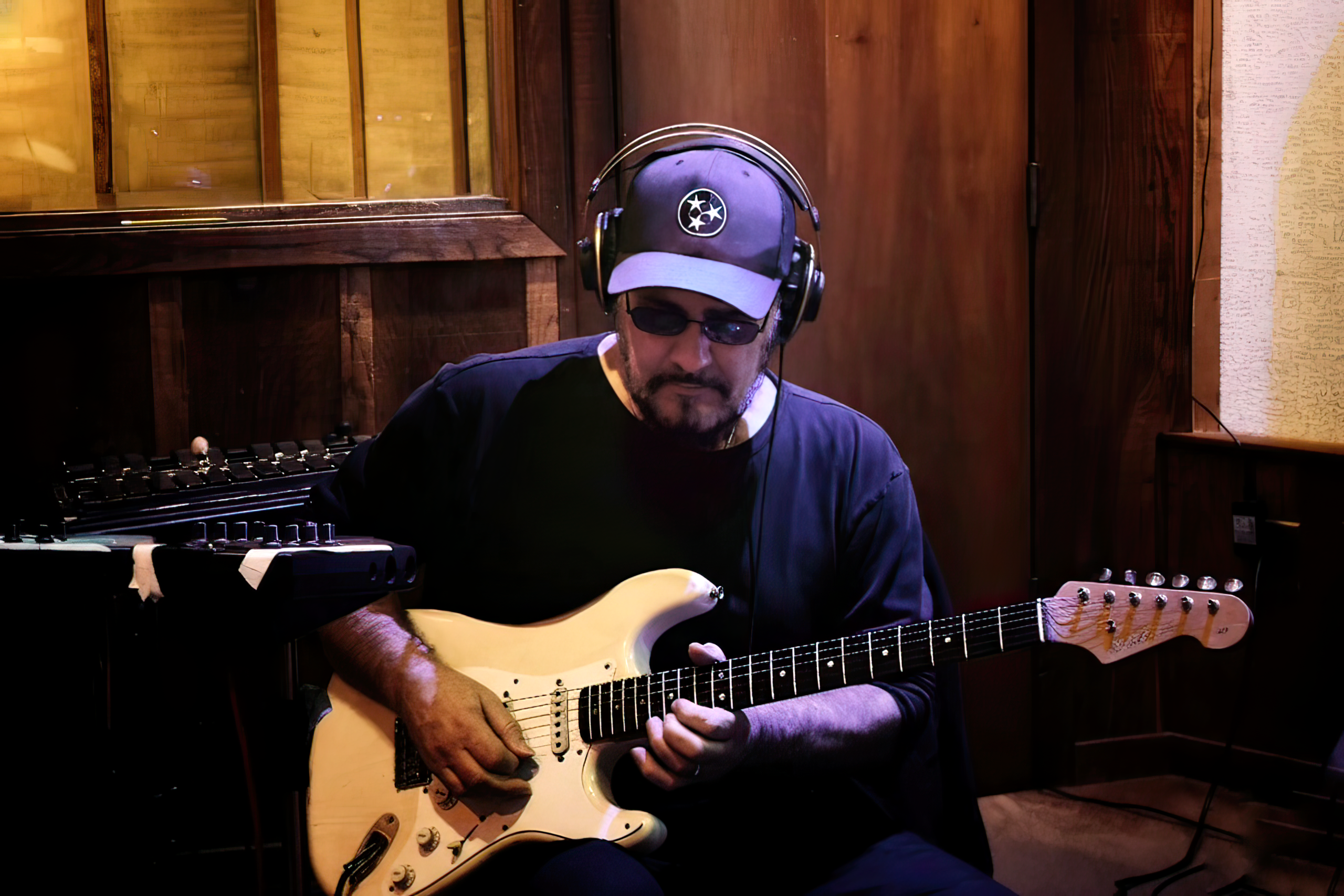
Devin Powers, a musical force for over 45 years, has navigated a career path few could claim—from headlining gigs in the San Francisco Bay Area and collaborating with rock legends like John Entwistle to becoming one of the most decorated composers in history. With credits including the hit TV series Blind Date, the Bachelor franchise, and You Vs Wild (for which he received an Emmy) and song placements in films including Wakanda Forever and Wicked, the foundation of his signature sound has remained constant: Celestion loudspeakers, most notably the Alnico Blue, Alnico Gold, and the G12 EVH.
Can you share your origin story? How did you get your start as a guitar player?
I grew up in Redwood City, California, and came from a working-class family. My father was a war hero who stormed the beaches at Normandy and brought a large hollow-body acoustic guitar back from Europe, which was my first exposure to music. I started learning songs around four or five years old. By sixth grade, I got my first electric guitar, a broken SG that my dad had re-glued because we were poor. I worked constantly after school to buy gear, eventually acquiring a nice Les Paul and a Marshall stack. By my mid-teens, I was getting mentored by Neal Schon and jamming with local legends in the San Francisco Bay Area like the guys from Tower of Power,
My high school band, The Kids, began opening for groups like Journey, The Tubes, and Greg Kihn, eventually headlining gigs. We landed a worldwide 7-Up commercial, which helped us buy better amps, including my first Hiwatt amp. When we returned from a 60-day, sold out tour of Japan in 1983, my bandmates were ready for regular jobs, but I knew I was a lifer.
Your career then famously intersected John Entwistle. How did that opportunity come about?
After my rock band failed to get signed following an Atlantic Records development deal (due to our manager leaving to work with Sammy Hagar and Van Halen), my musical godfather took my demo tape to England. I later got a phone call from a heavily accented voice saying, “It’s John from The Who”. I didn’t believe it at first, but he had five of my songs and wanted to record them for his new band, THE ROCK.
Walking into his 140-acre estate in Gloucestershire was one of the most surreal moments of my life. We recorded, mixed, and mastered an album, even signed a deal with Warner Bros, but the record was shelved one day after a call from Pete Townsend. John’s manager explained that The Who was getting back together for a reunion tour, and they would make more money off one night of Who T-shirts sales than they would from ten Entwistle albums. I later toured with Lee Rocker of The Stray Cats before my band, The Vents, signed with Universal Records in 1998.
How did you pivot from being a touring rock musician to composing for TV?
A friend I was producing connected me with a team looking for a “rock guy” to do music for TV shows. Turns out, they were huge Who fans and bonded with me over playing with John Entwistle. They hired me for a new unscripted show called Blind Date, allowing me to keep all my publishing and writing, and paying me a significant weekly salary. I brought in my gear—including a Celestion-loaded Marshall stack—and started writing. I did 500 pieces of music for Blind Date before the first Christmas.
When I received my first ASCAP check in January, I called my mom and told her I wasn’t quitting—I realized I could do this. I ended up doing 1,500 episodes of Blind Date and many other shows, winning the ASCAP award for “Most Performed Television Underscore” for several years. My heavy rock music style was a new thing in TV, differentiating me from traditional library music.
Your composing business grew rapidly. How did you take it to the next level?
Around year four or five of my TV career, I ran into Hans Zimmer at the ASCAP Awards red carpet. I asked him how he managed to score so many films annually. He asked the size of my team, and when I admitted I was doing it all myself, he essentially told me that approach would “kill me” and I couldn’t have a long career doing that.
He advised me to find people who could “clone” my style and assign them different shows, while I remained the lead composer, providing the themes and vibe. The next day, I began hiring rock musician friends and training them. Today, I lead a team of about nine master composers. This advice was instrumental in allowing me to continue composing, leading to 27 years in TV and scoring massive shows like Naked & Afraid for Discovery. Currently, I reside in Nashville, focusing on cutting country rock, blues rock, and heavy rock records while still running Powers Music Group.
When did you first become aware of Celestion speakers?
I took the back off my first 4×12 Marshall cab and saw the name on the speakers. I soon realized that Marshalls often contained different types of Celestions.
I have been a Celestion player since I was 18 years old and I have remained a Celestion player because the speakers are the truest to a guitar’s sound. When I play through a Celestion, I can clearly hear the difference between a Stratocaster, a Les Paul Jr., and a Les Paul Custom.
Which specific Celestion drivers are your go-to?
I have a large collection of Celestion speakers loaded into various cabinets in my studio. I use a 4×12 cabinet loaded with Alnico Blues at the bottom and Reds at the top, along with cabinets featuring Creams and Golds. If I am looking for a jangly, compressed sound, similar to Tom Petty, I often use the Alnico Gold in my Silent Sister isolation cabinet. For more of a Jimi Hendrix-type bite, I might use 30-watt drivers.
My two favorite Celestion drivers are the Alnico Blue and the 20-watt Greenback (which is now the G12 EVH). They are in a dead heat, depending on what I am trying to achieve. I love the EVH with my 100-watt Wizard head. It’s perfection. This combination allows the tone to break up and sustain when the volume is all the way up for solos but remain distinct and clear when I turn the volume down.
What is your overall approach to achieving great guitar tones?
My philosophy for tone starts with getting the sound right out of the gate. I almost always use Neve EQs on the microphones (often blending a Royer 121 with an SM58). I do not use compression on guitar when tracking because a good speaker already compresses the signal. A critical element for my preferred tone is rolling the low end off the guitar and using treble bleeds on my volume knobs. This is essential because, on a Les Paul, turning down the volume often results in “mud”. By using treble bleeds and a specific capacitor (like an .015) for the “woman tone” on the tone knob, I can roll back the volume during a solo (usually to three or four) to cut off the high end, making the note speak more like a horn.
In my opinion, Celestion gives every guitar player the best tone possible. It facilitates a magical interplay between the artist, the amplifier, and the tone of the speaker.
For more information on Devin Powers and to hear examples of his music visit Powers Music Group.