Celestion Impulse Response: G12H-150 Redback

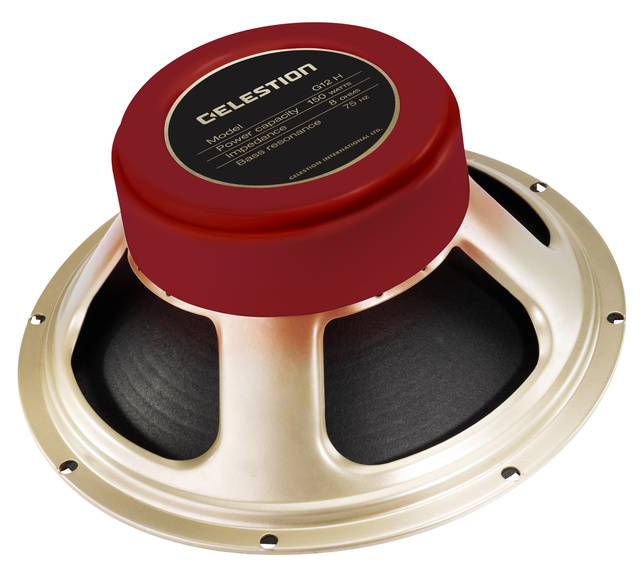
Hot on the heels of the launch of our new G12H-150 Redback speaker, comes its digital equivalent.

If the power of the Redback appeals to you but you don’t want the neighbours calling the police, having an IR version to use at home could be the perfect solution.

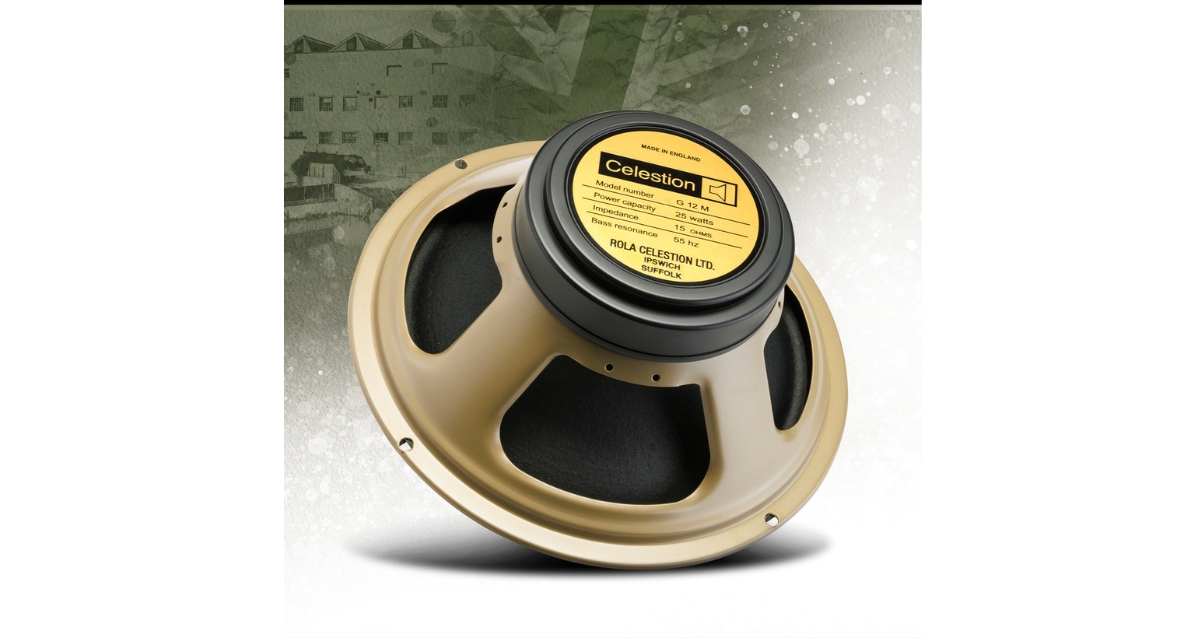
With the Redback, Celestion has designed a guitar speaker of contrasts. It’s built to deliver towering slabs of frightening, monstrous tone, but still has the detail and clarity you need to play loud and clean. Constructed with a supersized 2-inch voice coil, combined with the heaviest G12 magnet and a ton of engineering expertise, this guitar speaker delivers a tight, fat low end, more laid back treble and enough midrange character to deliver compelling lead lines.

Check out the physical Redback G12H-150 characteristics here.

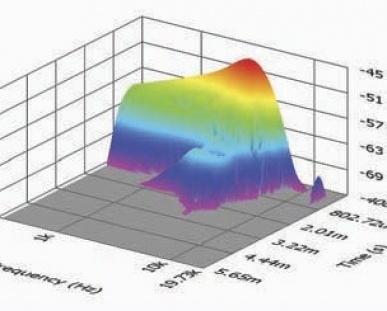
Get gargantuan tone direct to your modelling amp or audio workstation and dial in balance, responsiveness and superb playability delivered by the Redback with muscular ease. Download the Redback speaker impulse response here.

Read the full article here.
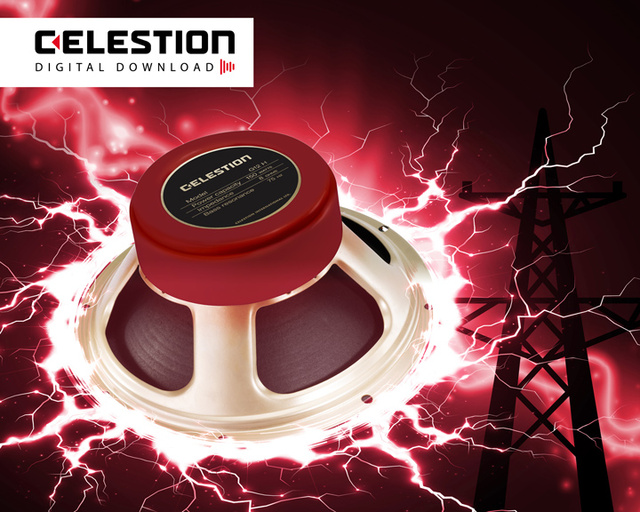
Celestion Introduces the G12H-150 Redback Guitar Speaker Impulse Responses

Ipswich, UK (May 8, 2017) — Celestion is pleased to announce the introduction of  G12H-150 Redback Guitar speaker tones as new additions to their celebrated line of Impulse Reponses. As the premier manufacturer of guitar and bass loudspeakers, Celestion created their line of IRs using state-of-the art gear, award-winning engineers and world-class recording facilities, so that the tones are the definitive digital representations of the company’s renowned classis guitar speaker tones. The new G12H-150 Redback Impulse Responses, along with the seven other classic loudspeaker IRs which premiered earlier this year, are available for audition and download at Celestion Plus.

The Celestion G12H-150 Redback is a guitar speaker of contrasts, built to deliver towering slabs of frightening, monstrous tone, while still delivering marked detail and clarity. The new G12H-150 Impulse Responses allow players to now get this gargantuan tone direct to their modeling amp or audio workstation, and dial in balance, responsiveness and the superb playability of the Redback with ease.

Five different Impulse Responses are available for the G12H-150 Redback speaker, representing five distinct cabinet types, including: 1×12 (open back,) 1×12 (closed back,) 2×12 (open back,) 2×12 (closed back) and 4×12 (closed back.) The responses from every one of the cabinets have been recorded with three high quality, professional, studio-standard recording microphones, with each one placed in six distinct positions (the result being 18 IRs for every cabinet type). In addition, w a further eight IRs per cab are included, which have been created by mixing a selection of single IRs, for additional tonal options.

“Celestion have enjoyed an overwhelmingly positive reception to our new Impulse Responses since their introduction just a few months ago, so adding the acclaimed Redback to our line of IRs was a natural fit,” says Nigel Wood, Celestion CEO. “We will continue to make more original, authentic Celestion Impulse Responses available as a natural extension of our product range — providing the authentic speaker tone our customers want, in a convenient digitally downloadable format.”

The new G12H-150 Redback Impulse Responses join the original set list of Celestion IRs available for purchase including the G12M Greenback, G12M-65 Creamback, G12M-75 Creamback, G12H Anniversary, G12-65, Celestion Blue and Vintage 30  models mounted in 1×12 and 2×12 open and closed back and 4×12 cabinets.  Celestion IRs, which capture the essential behavior of the cabinet in the specific space in which it was recorded, including the frequency and phase response of single drivers as well as the interaction of multiple speakers, offer the user significant benefits. In both recording and live production, Celestion IRs enable the desired tone to be precisely and consistently reproduced regardless of the music recording or live sound environment. And IR users can escape the limitations of a single mic and cabinet setup and explore a universe of possibilities to create the perfect tone. Once you find a tone that you love, it can be precisely recreated, in the studio or on the road, time after time. And the IRs allow Celestion customers to audition specific models before purchasing one or more physical speakers.

Celestion IR digital downloads are available in uncompressed, industry standard .WAV format at 44.1 kHz, 48 kHz, 88.2 kHz and 96 kHz sample rates at 24 bit depth, in lengths of 200 and 500 milliseconds Once the files are downloaded and unzipped, users simply load the IRs into a convolution plug-in in their DAW or into other processing hardware. These formats will work in all known hardware capable of loading IRs, and for the most popular hardware Celestion have already grouped together the correct formats. Guitar processor manufacturers supported include Atomic Amps, Fractal Audio Systems, Kemper, Line 6, Logidy, Positive Grid, Two Notes Headrush and Yamaha. The Celestion IR files may be downloaded in the sample rate and length appropriate for the hardware being used or as a complete package of all rates and lengths. Certain third party hardware requires the files to be converted into a proprietary format before use.

The new G12-H 150 Redback Impulse Responses are available both as an individual single cabinet-type IR as well as a collection which includes all five cabinet. For more information about Celestion Impulse Responses, visit www.celestionplus.com.

About Celestion and Celestion Guitar Speakers

An important element to essential British guitar tone since the birth of Rock & Roll, Celestion Guitar Speakers are famous for their lively and vocal midrange character with plenty of sparkle and chime. With worldwide headquarters in Ipswich, England, Celestion design, develop and manufacture premium guitar and bass loudspeakers, and high-quality professional audio drivers for sound reinforcement. These world-renowned speakers are used onstage and in clubs, theatres and other venues the world over. Contact Celestion at: info@celestion.com and visit us on Facebook at www.facebook.com/celestion.

www.celestion.com


Celestion Introduces the G12H-150 REDBACK Guitar Speaker

Ipswich, UK (January 17, 2017) — At this year’s winter NAMM Show, Celestion, the premier manufacturer of guitar and bass loudspeakers and professional audio drivers for sound reinforcement applications, is pleased to introduce the new G12H-150 Redback, created especially for players who are looking for extreme power handling but refuse to compromise on great tone.

Constructed in the U.K., with a supersized 2-inch voice coil and featuring the heaviest G12 magnet, the Redback delivers a gargantuan 150-watts of power handling>The result is a guitar speaker that sounds 100% Celestion in character, yet is primed to withstand a pummeling from a 100-watt head all by itself, and still come back for more.

Celestion’s engineering expertise has assured that there is no need to choose between power and tone with the new Redback, with its tight, well-controlled low end, detailed midrange and more relaxed treble. The Redback is truly high power guitar speaker that can still deliver balance, responsiveness and superb playability, with muscular ease.

Loaded into low power combos, players can expect tons of smooth, clean tone and don’t need to be afraid to plug in their favourite stomp box. For those interested in downsizing to a 1×12 cabinet, they need only hook up a single Redback to their 100-watt head in order to generate giant slabs of frightening, monstrous tone. 

About Celestion and Celestion Guitar Speakers

An important element to essential British guitar tone since the birth of Rock & Roll, Celestion Guitar Speakers are famous for their lively and vocal midrange character with plenty of sparkle and chime. With worldwide headquarters in Ipswich, England, Celestion design, develop and manufacture premium guitar and bass loudspeakers, and high-quality professional audio drivers for sound reinforcement. These world-renowned speakers are used onstage and in clubs, theatres and other venues the world over. Contact Celestion at: info@celestion.com and visit us on Facebook at www.facebook.com/celestion.

www.celestion.com

Heritage Series G12H (55Hz) on the test bench

Thanks to Vance Dickason at Voice Coil for this excellent in-depth analysis and review of the Heritage G12H(55Hz). It’s certainly very interesting to see how a guitar speaker performs under the rigorous test conditions usually reserved for Pro Audio speakers.

Would you use these speakers for precision audio? I think the answer is No! They’re much better for Rock!

Listen to the Heritage Series G12H (55Hz) here.

Find out Where to Buy here.

10,000 Volts of Tone: Guitar Powerhouse Tommy Bolan’s N.Y.C. Unleashes “Rage Metal” with Celestion Loudspeakers

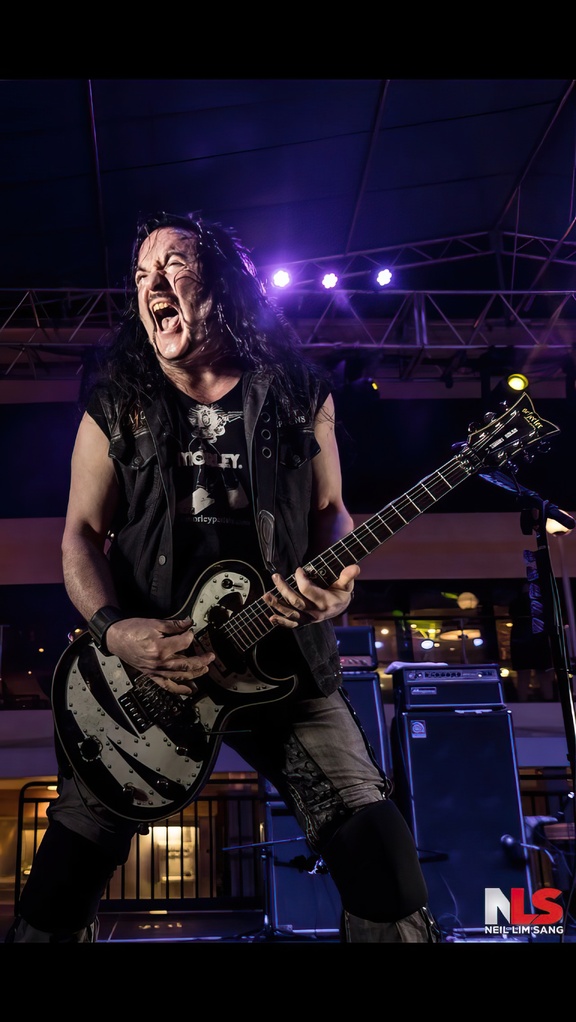
Tommy Bolan is a force of nature. Best known for his “10-thousand volts” live performances and his role as the six-string shredder behind Warlock’s Platinum-selling Triumph & Agony album, Bolan has cemented his place in heavy metal history. Today, he continues to bring the fire, fronting his blistering new project, N.Y.C.

Bolan’s philosophy on guitar tone is as uncompromising as his playing style: it has to be huge, it has to be articulate, and it absolutely must be driven by Celestion speakers. We caught up with Tommy to talk about his wild musical journey, the uncompromising “rage metal” of N.Y.C., and why he relies on the Celestion Vintage 30 to deliver his signature wall of sound anywhere in the world.

Let’s start at the beginning. What was that first experience that made you realize you wanted to be a musician?

Tommy Bolan: I’d have to go back to Kiss. My brother owned the stereo, so he controlled the music. He played Destroyer and Rock and Roll Over, and then I saw them live at Madison Square Garden. I just lost my mind! A week later, we were putting on fake Kiss shows in the neighbourhood. We cut out cardboard guitars, went to Baskin-Robbins to get big old ice cream canisters, and painted them up to look like drum sets. After that, I started taking lessons in Jackson Heights, and two and a half years later, I became a teacher. I was just so absorbed with it that I melted right in.

 Bring us up to today. You’re playing some reunion shows with Warlock, but tell us about your new band, N.Y.C.

Tommy Bolan: Yeah, I’m playing some festivals like Hell’s Heroes with Doro doing the Triumph & Agony stuff, which is fantastic. But the story of the hour is my band N.Y.C. We just finished our album, Built to Destroy, via Adrenalizing Media. It’s me singing and playing guitars, along with a rhythm section from hell: Stet Howland from WASP and Steve Unger from Metal Church. People ask me to describe the sound, and I call it “rage metal.”

 What exactly is “rage metal?”

Tommy Bolan: I describe it as the energy of AC/DC, the power of Judas Priest, tied in with the grit of Motörhead. I’m the frontman, so I want that AC/DC energy. Priest brings that massive, unavoidable power—like a wall coming at you. And Motörhead is just that attitude of, “We’re playing, get out of the way!” The album has a very forward-moving theme. It’s intense! I got to vent all my aggression and anxiety. My philosophy is: lead, follow, or get out of my way. But we also have cool dynamics—Vince DiCola, who did the Rocky IV soundtrack, even came in and played some icy piano on a track called “Gasoline”. I just dropped the hammer on this record. And of course, having the proper Celestion speakers to play it all through made all the difference.

 Who were your tonal influences growing up?

Tommy Bolan: Judas Priest really influenced me. When I heard Screaming for Vengeance, I probably blew the speakers out of my car! As I transitioned into metal, I started analysing tone, depth, and articulation. Priest’s distortion kept getting bigger and bigger with every album. Then there’s AC/DC—they could sound clean, but it was always massive.

Do you remember when you first discovered Celestion speakers?

Tommy Bolan: Actually, I do. Back in the day, I’d hear friends playing through Marshall half-stacks and I’d go, “Dude, that sounds great!” Finally, I got my hands on a cabinet loaded with Greenbacks, and I was like, “Holy cow!” Celestion brought out the absolute best in my amp; it always does. I started collecting cabinets with Greenbacks, Vintage 30s, and G12Hs. During the Triumph & Agony album, we brought in a famous amp tech from New York named Cesar Diaz. He looked at my vintage Celestion cabinets, popped the backs off, and said, “People would jump out of windows for these things!”

What does your rig look like today? Do you use a different setup in the studio versus playing live?

Tommy Bolan: My flying rig is pretty much my main rig. The new album was recorded primarily with my Peavey 6505 Plus and an old XXX II amp. I brought my amps in, turned everything up to 95, and just went nuts! For speakers, the whole album was recorded with Celestion Vintage 30s.

Why is the Vintage 30 your go-to speaker?

Tommy Bolan: First of all, it sounds great. That’s the most important thing. But speaking professionally, I EQ my entire rig around the Vintage 30 because it is consistent and available. If I fly to play a gig in Sweden or Norway and request a backline, they might have some cabinet I’ve never heard of, but chances are it will have Vintage 30s in it. I strike gold every time and I win! I don’t have time to stop during soundcheck and go, “What’s the problem?” The Vintage 30 delivers every single time.

I’m also looking forward to trying out the new Celestion Peacekeeper. I think it’s a badass idea because I want to turn my smaller combo amps up even louder, get that power amp structure to break up sweetly, and see how it reacts. I’m going to turn the fire up so the amp explodes with tone!

What advice do you have for players chasing a great heavy metal tone?

Tommy Bolan: They always say tone is in your fingers, which is true to a point. But you have to think of your signal chain from A to Z. You can’t spend all your money on an expensive amplifier and then buy a blown speaker you found in an AM radio. It just ain’t going to work! You’ve defeated the purpose. Get a great amp like a Peavey, use good pedals like Morley, and load your cabinet with Celestions. Even your patch cables matter. Follow the sound from the guitar to the speaker. Each point must count.

After all these years, what does the Celestion brand mean to you?

Tommy Bolan: It’s an honour to endorse Celestion. With what I do, failure is not an option. There’s no sleep, and no rest for the wicked. Adding a Celestion to your rig brings out the best in your amp. It is always a step up in any condition. You can’t lose!

What’s next for N.Y.C.?

Tommy Bolan: We’re waiting on tour dates for Canada, Australia, and Europe. Adrenalizing Media opened all the doors for this, and now we’re getting ready to take the band on the road. One thing is for sure: it’s going to be loud, and it’s going to be Celestion powered. Fuhget about it!

To learn more about Tommy Bolan and check out the new album ‘Built to Destroy’, visit NYCtheband.com.


From Tours to TV Tones: Celestion Empowers the Decades-Long Musical Journey of Devin Powers

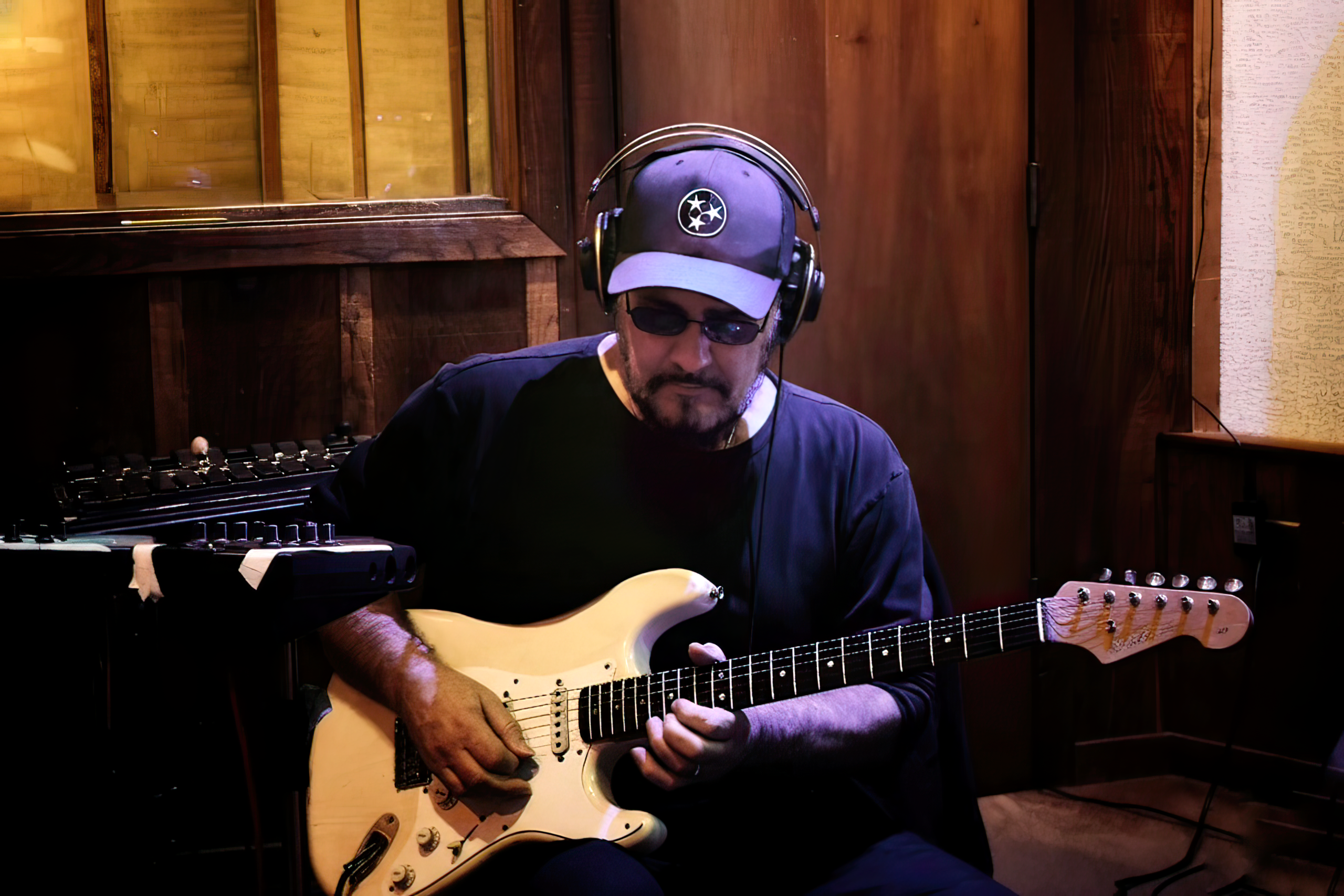
Nashville, TN, USA (February 18, 2026) — Devin Powers, a musical force for over 45 years, has navigated a career path few could claim—from headlining gigs in the San Francisco Bay Area and collaborating with rock legends like John Entwistle to becoming one of the most decorated composers in history. With credits including the hit TV series Blind Date, the Bachelor franchise, and You Vs Wild (for which he received an Emmy) and song placements in films including Wakanda Forever and Wicked, the foundation of his signature sound has remained constant: Celestion loudspeakers, most notably the Alnico Blue, Alnico Gold, and the G12 EVH.

Powers’ journey began in Redwood City, California, learning on a hollow-body acoustic brought back from World War II. By his mid-teens, he had mentors like Neal Schon and was jamming with local legends like Tower of Power before his high school band, The Kids, found themselves opening for Journey and headlining a sold-out tour of Japan. Returning home in 1983, Powers made a choice: “I knew I was a lifer.”

That commitment was tested in 1986 when a heavily accented voice on the phone said, “It’s John from The Who.” Powers was whisked away to John Entwistle’s 140-acre Gloucestershire estate to write and co-produce for Entwistle’s band, THE ROCK. It was a surreal pinnacle, but when the record was shelved following a Who reunion, life threw a curveball that led Powers to Hollywood.

Hired by Who fans to be the “rock guy” for a new show called Blind Date, Powers brought his Celestion-loaded Marshall stacks into the world of television. He didn’t just underscore scenes; he changed the industry’s sound, eventually composing 1,500 episodes and winning multiple ASCAP awards for “Most Performed Television Underscore.” Following a fateful red-carpet encounter with Hans Zimmer, Powers scaled his approach, founding Powers Music Group to score global hits like Naked & Afraid, The Bachelor, and The Amazing Race.

When crafting guitar tones for these recordings, Powers relies heavily on Celestion. “I have a large collection of Celestion speakers loaded into cabinets in my studio,” said Powers. “I use a 4×12 cabinet loaded with Alnico Blues at the bottom and Reds at the top, along with cabinets featuring Creams and Golds. If I am looking for a jangly, compressed sound, similar to Tom Petty, I often use the Alnico Gold in my Silent Sister isolation cabinet. For more of a Jimi Hendrix-type bite, I might use 30-watt drivers. My two favorite Celestion drivers are the Alnico Blue and the 20-watt Greenback (which is now called the G12 EVH).”

“In my opinion, Celestion drivers give every guitar player the best tone possible,” he explains. “They facilitate a magical interplay between the artist, the amplifier, and the tone of the speaker. I have been a Celestion player since I was 18 years old, starting with my first Marshall. I have remained a Celestion player because the speakers are the most true to a guitar’s sound. When I play through a Celestion, I can clearly hear the difference.”

To read the full-length interview with Devin Powers, visit the Celestion Speakerworld blog.

About Celestion

With worldwide headquarters in Ipswich, England, Celestion design, develop and manufacture high-quality professional audio loudspeakers and compression drivers for sound reinforcement, as well as premium guitar and bass guitar loudspeakers. These world-renowned speakers are used onstage and in clubs, theatres and other venues the world over. With more than 100 years of success, the company continues to offer the latest technologies and innovations in the world of loudspeakers. celestion.com

Celestion’s Legendary Heritage Series Returns with New G12M (55) “Blackback” at Winter NAMM 2026

Anaheim, CA (January 21, 2026)  — At this year’s Winter NAMM 2026, Celestion, the premier manufacturer of guitar and bass loudspeakers, is proud to announce the return of the celebrated Heritage Series guitar speaker line including the G12H (55), G12H (75), and G12-65, alongside the debut of the “Blackback” edition of the long-sought-after G12M (55). The Heritage Series, back by popular demand, brings several of the company’s most beloved classic drivers, coveted by collectors and tone purists, to recapture the sonic qualities of the era.

The Celestion Heritage process identifies the most desirable version of a driver from a specific point in time and sets about a painstaking process of regressing the speaker’s development to its inception. Using original blueprints and material specifications, Celestion sound engineers have ensured magnet assemblies and coil formers are produced exactly as they once were. In addition, they have reformulated adhesives and edge treatments that are no longer commercially available. Finally, authentic labels have been used to bring these exquisite old speakers back to life.

One of the stars of this year’s NAMM exhibit is the G12M (55) “Blackback” (originally released as the T1511). While Celestion’s earliest popular ceramic speakers featured green plastic cans, the company transitioned to a black can in the early 1970s—a change that has taken on great significance for tone enthusiasts. This G12M version with a 55Hz bass cone has been inextricably linked to players like Paul Kossoff of Free, whose famously sweet sustain defined an era. Rated at 25 watts with a sensitivity of 96dB, the G12M (55) delivers the punch, sparkle, and singing midrange that many consider the very essence of Celestion tone.

Joining the G12M (55) are the returning Heritage Series G12H (55) and G12H (75). These faithful re-creations capture the unmistakable mojo of late 60s rock guitar tones, both famously powering the rigs of legends like Jimi Hendrix. The G12H (55) features a 55c/s bass cone known for thick, syrupy tones and a deep, growling back end—a definitive choice for towering 4×12 stacks. The G12H (75) employs a 75c/s lead  cone, providing a tighter bottom end and punchy upper-midrange for those seeking different tonal balance. Both G12H models feature a 30-watt power rating and 100dB sensitivity.

Also now found under the Heritage Series umbrella is the currently available G12-65. A firm favourite of hard rock players in the early 80s, this 65-watt driver features a precisely tuned midrange and crisp, defined top-end that delivers an aggressive crunch capable of punching through any mix.

“Celestion fans have been asking us to re-introduce the drivers found in the new Heritage Series for years, and no stone was left unturned in pursuit of their original sound,” said Paul Cork, Celestion’s Head of Engineering. “We poured through our large archive of drawings, blueprints, and parts-lists; we called upon the expertise of Celestion engineers past and present, and spent hundreds of hours in our listening room, critically auditioning the original speakers against the Heritage models in development, before we were comfortable in proceeding with production.”

More information on the Heritage Series is available on the Celestion website.

Visit Celestion at the 2026 Winter NAMM Show at the Anaheim Convention Center, Booth #6602, January 22-24, 2026.

About Celestion

With worldwide headquarters in Ipswich, England, Celestion design, develop and manufacture high-quality professional audio loudspeakers and compression drivers for sound reinforcement, as well as premium guitar and bass guitar loudspeakers. These world-renowned speakers are used onstage and in clubs, theatres and other venues the world over. With more than 100 years of success, the company continues to offer the latest technologies and innovations in the world of loudspeakers. celestion.com

Trivium Takes Flight in THE HANGAR: The Celestion-Infused Launchpad Dedicated to Reaching New Tonal Heights

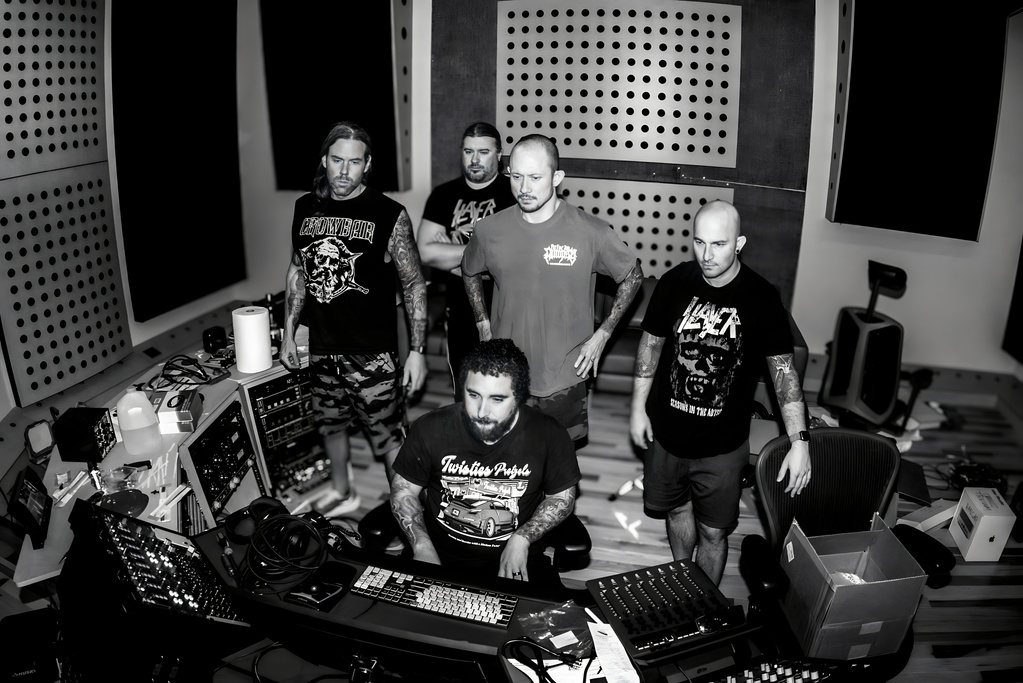
Orlando, FL, USA (July 30,2025) — Heavy metal giants Trivium have always been renowned for their powerful, intricate, and meticulously crafted sound. Now, with the completion of their cutting-edge studio, THE HANGAR, with its arsenal of guitar cabinets loaded with Celestion Vintage 30, G12M-65 and G12H-75 Creamback, G12M Greenback, and G12H Anniversary speakers, the band is set to embark on a new chapter of sonic exploration. THE HANGAR represents the band’s deep-seated commitment to sonic excellence and provides a dedicated space to push their creative boundaries.

“We wanted a space where we could be free to create on our terms and we wanted it in Orlando, so we wouldn’t need to travel to record,” says guitarist Corey Beaulieu.

Designed by renowned studio architect, Roger D’Arcy and built from the ground up to meet stringent acoustic specifications, THE HANGAR is more than just a recording studio; it’s a fully equipped creative hub where the band can write, rehearse, experiment, and record whenever inspiration strikes.

Central to this sonic exploration is an expansive collection of Celestion guitar speakers, meticulously curated and integrated into THE HANGAR’s studio arsenal.

“We’ve got Vintage 30s, G12M-65 and G12H-75 Creambacks, G12M Greenbacks, G12H Anniversaries, plus all the older models we’ve accumulated over the years,” says frontman and guitarist, Matt Heafy.

The studio boasts a diverse array of Celestion-loaded cabinets from industry-leading brands like Mesa Boogie, Marshall, and Peavey EVH. This impressive collection allows Trivium to explore the nuanced sonic personalities of each speaker and cabinet combination, ensuring they have the perfect tonal tools at their disposal.

“You’ll get different sounds from cab to cab, even if they have the same Celestion speaker,” explains Beaulieu. “So, it’s all about finding which combination works best for what we’re doing in any particular session.”

To facilitate this experimentation, THE HANGAR features a dedicated isolation booth specifically designed for speaker testing. In this sonic laboratory, Heafy and Beaulieu, along with producer and engineer Mark Lewis, can swap speakers in and out of cabinets, meticulously analyzing their characteristics and experimenting with microphone placement to capture the subtle nuances of each speaker.

“Mark has been doing surgery on all the cabs, pulling out stock speakers and doing things like placing four different Celestion speakers in the same cabinet so we can test everything with our microphone collection in our cabinet isolation booth,” says Heafy.

This commitment to meticulous experimentation is at the core of Trivium’s sonic philosophy. They understand that every element in the signal chain, from the guitar to the speaker cabinet to the microphone, contributes to the final sound.

“Any little variable in tone can be inspiring,” says Heafy. “Our mission right now in THE HANGAR, is to give our amps, cabinets, and speakers the run-through, to know which combinations will bring that extra tonal magic when we begin tracking.”

With THE HANGAR, Trivium has created the perfect environment to pursue that sonic inspiration. Powered by Celestion’s legendary speaker technology and driven by Trivium’s relentless quest for tone, this creative haven is set to become the birthplace of a new era of metal and sonic innovation.

“That’s what this quest of tone is,” concludes Heafy “This obsession with gear has always been to find something new and inspiring, and you never know where it can lead you.”

Trivium are about to embark on a tour of the UK, Europe and the US, starting the first week in August 2025. See their tour dates here.

To read the full interview with Trivium, visit the Celestion Speakerworld blog.

About Celestion

With worldwide headquarters in Ipswich, England, Celestion design, develop and manufacture high-quality professional audio loudspeakers and compression drivers for sound reinforcement, as well as premium guitar and bass guitar loudspeakers. These world-renowned speakers are used onstage and in clubs, theatres and other venues the world over. With more than 100 years of success, the company continues to offer the latest technologies and innovations in the world of loudspeakers. celestion.com

Trivium, Celestion and the Lifelong Quest for Tone

For twenty-five years, American heavy metal band Trivium has consistently pushed the boundaries of their sound, crafting a sonic tapestry that seamlessly blends intricate arrangements with crushing heaviness. Throughout their career, a constant in their sonic arsenal has been Celestion speakers, most notably Vintage 30s (and Celestion built Marshall Vintages), Creambacks, Greenbacks, and various other models. We sat down with vocalist and guitarist, Matt Heafy and guitarist, Corey Beaulieu at their newly completed studio, THE HANGAR, to talk about their musical journey, the importance of tone, and their enduring partnership with Celestion.

How did your musical journeys begin? What were some of your early influences?

Corey Beaulieu: My musical journey started with my parents and siblings always having music on in the house. The first band that really got me excited about music was Guns N’ Roses, it was the Use Your Illusion II album. When I was eight, I got my first guitar, and the more I played, the more I became drawn to playing music. Discovering more cool metal bands added fuel to the fire and here we are today.

Matt Heafy: When I was around 11, I unsuccessfully tried out for a pop-punk band. After that experience, I gave up on music, but then a friend lent me The Black Album by Metallica. One listen, and I knew that was the kind of music I needed to make. I locked myself in my room for hours learning every riff and trying to emulate those sounds. Then for my eighth-grade talent show, I covered No Leaf Clover by Metallica and afterward, I was asked to audition to be the lead guitarist of a two-week-old high-school band called Trivium. This group of 16- and 17-year-olds were skeptical when they saw a middle-schooler walk in, but I launched into For Whom the Bell Tolls, played it perfectly, and I’ve been in the band ever since.


Those were your musical influences, how about your tonal influences as a guitar player?

Matt Heafy: Obviously, The Black Album was huge for me, and in my opinion, has some of the greatest metal tones of all time. Sonically, that album made me realise you don’t need excessive gain to achieve heaviness.
Metallica led me to Pantera and Megadeth, but what really got me deep into tone was a series of records produced by Andy Sneap. I was obsessed with Jeff Loomis’s guitar sound on Nevermore’s Dead Heart in a Dead World album. I loved the lead and melody guitar sounds of Arch Enemy’s Wages of Sin and I really liked his work with Testament. Those influences ultimately led us to work with Andy on our album Ascendancy.

Let’s talk about your history with Celestion. When did you first discover these speakers and what role do they play in shaping your signature sound?

Matt Heafy: We’ve used Celestion from the very beginning. When we first started playing live, I was living the dream, playing through big Marshall cabinets on stage, I think 1960Bs. One day I looked in the back and saw the name Celestion. That was how I first came to respect the brand.

Not long after, Jason Suecof introduced us to the Celestion BVs (the Celestion-built Marshall Vintage speaker loaded into the Marshall 1960BV cab) during pre-production for our Ember to Inferno album. He explained that they break up more and have more natural distortion and compression. We were obsessed once we played through them. And when we worked with Andy Sneap on Ascendancy, he used Mesa Boogie oversized Rectifier cabs with the same speakers.

To this day, the Trivium tone generally consists of a Peavey 5150 series head and a cab loaded with Celestion BVs or Vintage 30s. Any cab we’ve ever received that didn’t already have Celestions, had Celestion put in soon after.

Corey Beaulieu: I didn’t know much about speakers when I first joined the band. In 2005, we were playing a show at a venue in Buffalo, New York. All the acts on the bill were planning to rock their own 4×12 cabs, but the stage was too small. To save space, the headliner decided we’d all share their backline cabs and just swap out our amp heads. They were using Mesa Boogie cabinets with Celestion Vintage 30s. Even though we both used the same Peavey amp model, I was blown away by the difference in tone. They sounded so much heavier and cooler than what we were using!

That night in Buffalo was an eye-opener. Once I played through a 5150 amp, paired with a Mesa cabinet loaded with Celestion Vintage 30s, I knew why I started seeing so many people playing them on tour. It became the go-to combo for metal at the time.

Can you tell us about your current live rig and how it differs from your studio setup?

Corey Beaulieu: Live, we use EVH Stealth heads and cabs loaded with the special Eddie Van Halen Celestion speakers. We don’t have a set studio rig. Peavey EVH amps are generally the foundation of everything we do, but we’re in our new studio now mixing and matching different heads, cabs, and Celestion speakers to explore the sounds we can get.

Today we have Vintage 30s in an EVH cab, BVs in a Mesa Cab, and Vintage 30s in a Marshall cab. You’ll get different sounds from cab to cab, even if they have the same Celestion speaker, so it’s all about finding which combination works the best for what we’re doing in any particular session.

Matt Heafy: We’re also playing with a ton of amps at THE HANGAR, including older Peaveys, a JSX, a Triple X, a 6534 Plus, Block Letters, a 5150 II, a 5150 III, and a Soldano. We’ve found that the older 5150s need something before the head, and are using a Maxon Red overdrive into an ISP Technologies Decimator to help us get the most out of them. I’m playing my Gibson Les Paul Standard with custom Fishman pickups.

Corey brought most of the amps and cabinets into the studio. We’re finding some of the best combos we’ve ever played through. I’m having so much fun, it’s taking me back to feeling like a kid.


What you’re doing in your new studio represents a significant step forward for Trivium.
Tell us more about THE HANGAR.

Corey Beaulieu: When we first started recording there were studios everywhere, but many large studios are closed now. Those that are left often require you to work with a specific producer. We wanted a space where we could be free to create on our terms and we wanted it in Orlando, so we wouldn’t need to travel to record.

We were inspired by Metallica’s HQ and the way they use their space to jam, rehearse, and record. We already had an old hangar that we’d set up to rehearse for tours, so the next logical step was to build a studio in it.

Our buddy, producer, and engineer, Mark Lewis introduced us to the renowned studio designer, Roger D’Arcy. Roger was convinced that taking a room in the hangar and trying to make it a studio, wouldn’t be optimal. He suggested that if we built something from the ground up, we could have the best studio room we’ve ever been in and everything would be perfect.

We agreed and Roger and Mark got to work. We took our time to make sure everything was right and didn’t cut any corners and THE HANGAR has finally come together in the last couple of weeks. Between all our guitar equipment and the new recording gear, it’s the most outfitted studio situation we’ve ever recorded in. Now we have our studio and it’s exactly the way we want it, the ways that will work best for us.

The room came out amazing. I’m excited to finally have sounds emanating from this project we’ve worked on for so long. It’s definitely in the early phase and we haven’t scratched the surface of how everything will sound with this new studio setup.

How are Celestion speakers factoring into this new creative space?

Matt Heafy: We mentioned that we’re matching speakers, cabinets and heads and we have a huge Celestion library to do it with. We’ve got Vintage 30s, G12M-65 and G12H-75 Creambacks, G12M Greenbacks, G12H Anniversaries, plus all the older models we’ve accumulated over the years. Mark has been doing surgery, swapping speakers in and out of cabs. He even put four different Celestions in a single cabinet for testing in our isolation booth.

Corey Beaulieu:  We use a variety of different makes of cabinets with our Celestions: Mesa Boogie, Marshall, and EVH. That’s because the differences in the types or thickness of wood, the way they’re constructed, the air volume in the cabinet, can bring out different characteristics from the speaker.  The same Vintage 30 in a Marshall sounds different in a Mesa cab.

Matt Heafy: Right now, our mission in THE HANGAR, is to get ideas of what we dig and those will be the launchpad where we’ll start when we begin tracking. We’ll have given all our speakers and cabinets the run-through, and we’ll know which combo will bring that extra magic to the tone that’s needed.

Any little variable in tone can be inspiring and that’s the big thing. I don’t want people to think that we’re just collecting gear to collect gear. It’s not that at all. Every little thing can drastically change how you’re performing, feeling, and playing when you’re making music and that’s all anyone is looking for. That’s what this quest of tone is. This obsession with gear has always been to find something new to inspire you to come up with new ideas, and you never know where it can lead you.

You have complex arrangements in your music, how do you balance heaviness versus clarity in your tone?

Matt Heafy: Younger guitar players tend to think that more gain equals a heftier guitar tone, but it’s really a misconception. You won’t hear what you want by having all the dials set at 10 and getting blasted with distortion. Ironically, I used to do that as a kid, but I’ve learned that less gain actually equals a tighter tone. If you look at the Peaveys we’re playing right now, our pre-gain is set around six and our post-gain is around one or two. It’s about finding the right balance of gain and volume where you still hear your hands come through.

Corey Beaulieu: When people first get into recording, it’s common to crank the gain or the low end to get that full sound. But the reality is on the records where the guitar tone is great, if you really listen there isn’t an oversaturated, crazy amount of gain. That’s because when you’re recording, you’re layering multiple rhythm tracks and everything builds up. Once you start stacking guitar parts on top of each other, if everything is high gain, you’ll end up with this mess of a guitar sound. But if you keep the gain levels moderate on your layered tracks, you get this powerful wall of guitar sound.

Any final thoughts you’d like to share with aspiring guitarists?

Corey Beaulieu: Where we’ve been talking about sounds and tone, it seems like the younger musicians of today grew up using plug-ins and amp modelers, whereas people Matt and my age, grew up playing through cabinets and heads. There’s some magic to plugging into a tube amp and speaker cabinet when that feeling, that electrifying push of air happens. It’s something you can’t recreate when you plug into your laptop.

Some guitarists need or have no choice but to play through plug-ins or samples, and they serve their purpose, but I find that there’s just this extra organic vibe, sponginess, and percussive response when playing with real heads and cabs in person. I wish more younger people could experience how cool that vibe is.

Matt Heafy: Corey and I have been sharing what we love and what makes us sound and perform our best. What we do may not work for or be accessible to everyone. So, it’s important for musicians to notice when they pick up or plug into something if it makes them feel good.

Even though it may not be what others say is correct, if you play a plastic guitar and it makes you write your best riffs, that’s the right instrument for you. If playing through a tiny Roland Micro Cube makes you feel good, that’s the right amp for you. Likewise, if you play a $10,000 handmade custom guitar and it inspires you, that’s right for you.

We’ve discovered what’s right for us from years of experimentation, research, and playing. Every musician has to find what’s right for them on their own because there’s no right or wrong answer when it comes to music. If you love it, that’s what matters and I think that’s the amazing thing about music.

##

Celestion Introduces the First in their Series of Artist Impulse Responses: The Tony Iommi IR Collection

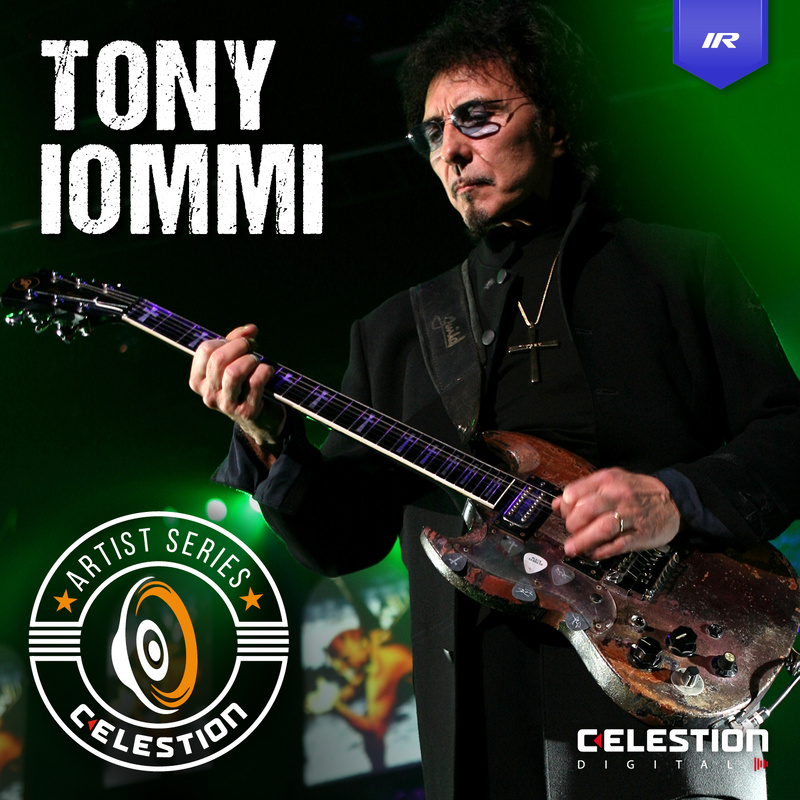
Ipswich, UK (November 13, 2024) — Celestion, the premier designer and manufacturer of guitar and bass loudspeakers, well-known as the “Voice of Rock and Roll” behind many of music’s most memorable guitar performance, is proud to introduce the first in their collection of Artist Series Impulse Responses, the Tony Iommi Impulse Responses. This digital collection of IRs faithfully captures the tones of two iconic cabinets that have been used extensively by Tony Iommi, on record and on stage through different eras of Black Sabbath’s history, for use on any digital music production platform. Whether in a DAW for recording or a modelling amplifier for performance, the Tony Iommi IR series places his iconic tones within reach of any musician, recordist, or producer, and are available for audition and download at celestionplus.com.

Widely considered the father of Heavy Metal, Tony Iommi has seared the sound of his legendary Laney amps and cabs into the history of rock ‘n’ roll. From the late ‘60’s grind of a cranked LA100 BL 100W head (boosted with a modified Arbiter Dallas Rangemaster because it just wasn’t heavy enough) through a LA412 HLC cab, to the 90’s smack of a signature model GH 100 TI head through a TI412S cabinet, he has written, recorded and toured some of most iconic music in the history of Classic Metal.

That iconic Iommi guitar tone is a sound that countless guitarists have aimed for, and it’s now possible to get a bit closer by playing through authentic digital versions of two of the Laney cabinets used by Tony.

The new Tony Iommi IR Series includes:

Tony Iommi Laney LA412 HLC:

Closed back 4×12”, Green label Goodmans® speakers. A late 60s cab recorded by Tony from 1969 through the early 1980s – it is THE sound of those early Black Sabbath records.

Tony Iommi Laney TI412S:

Closed back, 4×12 Celestion G12H speakers. This cab was owned by Tony and used extensively in the studio and on tour through the ‘90s – the sound of latter era Black Sabbath.

Both cabinets are available either singly or as a collection.

Celestion employs a meticulous recording process to digitize the sonic characteristics of their acclaimed Impulse Responses, beginning with studio-quality, go-to professional guitar cabinet microphones. Each IR thus offers a variety of mic type and placement options and can be loaded into any IR host within a DAW or into stand-alone amp modeling hardware. The result is an authentic speaker emulation that sounds every bit as outstanding as its hardware counterpart.

Paired with a DAW and IR loader plug-in, modeling amp hardware, or amp-top load box, Celestion Impulse Responses provide authentic tone alongside lively and dynamic response, all without introducing latency. These benefits create a playing experience that is as credibly vintage as any speaker can achieve, but with real-world performance that is predictable and reliable in today’s most demanding recording and performance applications.

Combining Celestion’s unparalleled all-areas access, together with considerable speaker response know-how, Celestion will introduce future Series of Artist IR collections captured using guitar speaker cabinets made famous by legendary and influential artists.

The Celestion Tony Iommi Responses are available for downloadable as individual IRs and as a complete collection at  celestionplus.com..

About Celestion Digital

The introduction of authentic Celestion Impulse Responses represented the company’s forward step in making their celebrated speaker tones available as digital downloads. Celestion IRs capture the essential behavior of a speaker in a particular cabinet in the specific space in which it was recorded, including the frequency and phase response of single drivers as well as the interaction of multiple speakers. They offer significant benefits in both recording and live production, enabling the desired tone to be precisely and consistently reproduced regardless of the recording or live sound environment. Explore, audition, and download the extensive collection of Celestion guitar and bass Impulse Responses at celestionplus.com. Celestion’s own SpeakerMix Pro sees the company delivering a truly forward-thinking studio software solution that enables users to get every ounce of tone from Impulse Response technology. The companion Dynamic Speaker Responses (DSRs) for the plug-in exemplify the next generation in speaker response emulation, representing a true advancement in the technology of digital speaker tone.  Celestion Plus.

About Celestion

With worldwide headquarters in Ipswich, England, Celestion design, develop and manufacture high-quality professional audio loudspeakers and compression drivers for sound reinforcement, premium guitar and bass guitar loudspeakers. These world-renowned speakers are used onstage and in clubs, theatres and other venues the world over. 2024 marks Celestion’s 100th year, please join us in the celebration. celestion.com